China has become an important manufacturing base for Portable Ct Scanners, serving hospitals, emergency teams, imaging centers, and mobile clinics worldwide. Buyers now face a crowded market, with differences in detector design, gantry size, battery endurance, software, and after-sales support.
Dr. John R. Haaga, a respected radiologist and medical-imaging educator, offers a useful reminder: “Good imaging is not only about sharper pictures; it is about answering the clinical question.” That principle matters when comparing Chinese Portable Ct Scanners. A compact scanner may fit beside an intensive-care bed, yet its practical value depends on dose management, reconstruction speed, DICOM compatibility, and dependable image quality. Small details matter. A loose cable can disrupt workflow.
This guide examines leading Chinese manufacturers from a global buyer’s perspective. It considers clinical applications, technical specifications, regulatory documentation, installation requirements, operator training, and long-term service. Buyers should verify certifications for their destination market, rather than relying only on marketing claims. They should also request sample images, warranty terms, cybersecurity information, and realistic delivery schedules.
Price can be attractive. Reliability must remain measurable. Some product pages provide impressive numbers but limited field evidence. That gap deserves attention. A careful evaluation should include demonstrations, reference-site feedback, and transparent communication with the supplier. No scanner fits every hospital. The best choice balances mobility, diagnostic confidence, total ownership cost, and local support. This article aims to make that comparison clearer, while recognizing that specifications alone cannot replace clinical judgment.
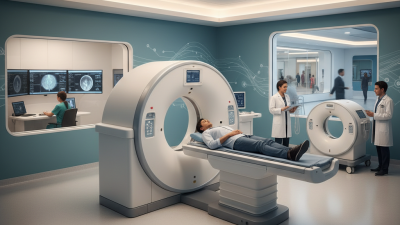
Portable CT scanners are compact imaging systems designed for bedside or near-patient examinations. Unlike fixed CT units, they can move between emergency rooms, intensive care units, operating theatres, and remote clinics. A trained radiographer positions the scanner, checks the patient, and confirms image quality before interpretation. It is not magic. Portability reduces transport risks, especially for unstable patients, but it does not remove the need for clinical judgment.
Common uses include head scans for suspected stroke, trauma assessment, chest imaging, and follow-up examinations. Some systems support patients who cannot safely travel to a radiology department.
In practical use, staff may wheel the scanner beside a ventilated patient, connect power, and begin a controlled scan within minutes. Dose still matters. Buyers should review dose reports, image reconstruction methods, detector performance, and software integration rather than trusting speed claims alone.
The global market role of Chinese portable CT technology is growing through flexible manufacturing and export-oriented engineering.
Global buyers should examine electrical standards, cybersecurity controls, service response, training, warranty terms, and local regulatory clearance. A low purchase price can hide expensive maintenance or limited technical support. I would not treat portability as the only measure of value. Image consistency across different body types, battery reliability, cleaning procedures, and replacement-part availability deserve equal attention.
One weakness remains: small hospitals may lack experienced imaging staff, so training quality can determine whether advanced equipment delivers safe, useful results.
Portable CT systems are moving from emergency departments into intensive-care rooms and remote clinics. Their value depends on more than compact dimensions. A reliable unit needs stable gantry alignment, fast reconstruction, battery protection, and clear dose reporting. IEC 60601-1 addresses basic electrical safety, while IEC 60601-2-44 covers safety and essential performance for computed tomography equipment.
Image quality must remain measurable after transport. The American College of Radiology’s CT quality-control guidance commonly uses water CT numbers near 0 HU, with a tolerance of approximately ±5 HU. It also monitors noise changes against baseline values, often within 10%. For buyers, these figures turn vague claims into acceptance tests. A phantom scan should show consistent low-contrast visibility, spatial resolution, and uniformity. Small details matter.
Dose control is equally important. AAPM Report 204 introduced size-specific dose estimates, because displayed CTDIvol can misrepresent patient exposure across different body sizes. Portable systems should display CTDIvol and DLP clearly, as required by relevant IEC provisions. In practice, a lighter scanner may sacrifice shielding, cooling capacity, or battery endurance. That trade-off is easy to overlook. I would not treat a low-dose label as proof of clinical quality. Independent physicist testing, repeated scans after relocation, and documented service records offer stronger evidence. WHO medical-device guidance also stresses maintenance capacity, which remains a weak point in some emerging healthcare settings.
| Category | Key Parameter | Typical Portable-System Range or Benchmark | Technical Relevance for Global Buyers | Recommended Verification |
|---|---|---|---|---|
| System Design | Portable configuration | Cart-based, transportable, or compact mobile gantry; configuration depends on whether the system is designed for head, extremity, or general CT imaging | Determines suitability for emergency departments, intensive-care units, operating rooms, ambulances, field hospitals, and remote clinics | Check transport procedure, minimum corridor and elevator dimensions, wheel-lock design, and deployment time |
| Imaging Coverage | Scan field of view | Common portable head systems provide approximately 16–32 cm; broader mobile CT systems may offer about 50 cm or more | A larger field of view supports more anatomical applications but normally increases system size, shielding requirements, and power demand | Confirm reconstructed and acquisition FOV separately, especially for obese patients and non-head examinations |
| Detector | Detector rows and collimation | Compact systems may use a limited detector array, while mobile diagnostic CT platforms commonly use approximately 16–64 detector rows; sub-millimeter detector elements are widely used | More detector coverage can shorten acquisition time and improve workflow, but does not automatically guarantee higher image quality | Request detector configuration, nominal total collimation, active area, and approved scan protocols |
| Spatial Resolution | High-contrast spatial resolution | Approximately 0.5–1.0 line pairs/mm for many compact CT applications, subject to reconstruction kernel, dose, and phantom method | Important for bone detail, small hemorrhage margins, temporal-bone imaging, extremities, and device-position assessment | Compare results using a standard high-contrast resolution phantom and the same reconstruction settings |
| Low-Contrast Performance | Low-contrast detectability and image noise | Should be reported with phantom-based noise and low-contrast detectability results at defined dose levels; no single universal value applies to every portable CT design | Provides a more clinically meaningful comparison than spatial resolution alone, particularly for soft-tissue and low-dose imaging | Require raw test conditions, phantom type, slice thickness, reconstruction algorithm, and dose index |
| Slice Thickness | Acquired and reconstructed slice thickness | Common reconstructed values include 0.625–5 mm; the available range depends on detector geometry and clinical application | Thin slices improve multiplanar and 3D reformations but generally increase image noise and data volume | Check whether the quoted value is acquired, reconstructed, or nominal slice thickness |
| Tube and Generator | Tube voltage and current | Tube voltage commonly spans approximately 80–140 kV; available tube current and power vary substantially by system class | A wider kV range supports protocol optimization, while generator capacity affects patient size, scan speed, and image noise | Review continuous operating limits, maximum mA, duty cycle, and performance under battery or low-power conditions |
| Acquisition Speed | Rotation time and scan duration | Rotation times may range from approximately 0.3–2.0 seconds; actual examination time also includes positioning, reconstruction, and transfer | Faster acquisition reduces motion artifacts and supports time-critical stroke, trauma, and critical-care workflows | Request complete workflow timing rather than rotation speed alone |
| Dose Management | CTDIvol and DLP reporting | Dose should be reported in mGy for CTDIvol and mGy·cm for DLP, with protocol, phantom size, scan range, and pitch clearly stated | Standardized dose metrics enable meaningful comparison and support local diagnostic reference-level programs | Verify dose display, dose alerts, protocol controls, pediatric settings, and automatic exposure-control functions where applicable |
| Image Accuracy | CT number accuracy and uniformity | Water-equivalent material should be close to 0 HU under defined test conditions; acceptance limits must follow the applicable quality-control protocol | Stable CT numbers are essential for reliable tissue characterization, follow-up comparison, and quantitative applications | Perform water-phantom tests for mean CT number, noise, artifacts, and uniformity during acceptance testing |
| Motion and Reconstruction | Iterative or AI-assisted reconstruction | Iterative reconstruction is widely used to reduce noise and support lower-dose protocols; algorithm performance is vendor- and protocol-dependent | Can improve image quality at reduced exposure, but excessive smoothing may affect texture and lesion visibility | Compare clinical images and phantom data at matched dose and slice thickness, not only software names |
| Patient Access | Patient aperture, table capacity, and positioning | Aperture and table load vary by system; buyers should confirm compatibility with adult, pediatric, trauma, and immobilized patients | Adequate clearance and load capacity are critical for emergency access and safe patient transfer | Verify maximum patient weight, table travel, transfer height, straps, head supports, and emergency release procedures |
| Mobility and Installation | Weight, footprint, and deployment time | Portable CT system weight and footprint vary widely; compact head CT units may be substantially lighter than mobile full-body systems | Directly affects shipping, installation, floor loading, room suitability, and movement between departments | Request packed and operational dimensions, total weight, floor-loading data, ramp requirements, and setup time |
| Power Requirements | Mains input, battery operation, and backup | Input voltage, frequency, peak current, and battery endurance are model-specific; systems may require dedicated circuits or stabilized power | Reliable power is essential in field hospitals, developing markets, and facilities with unstable electrical infrastructure | Confirm local voltage compatibility, UPS requirements, battery cycle life, charging time, and emergency shutdown behavior |
| Data and Connectivity | DICOM, PACS, and network security | DICOM image transfer, worklist support, storage, export, and configurable network security should be available for hospital deployment | Supports integration with PACS, RIS, teleradiology, electronic medical records, and remote service workflows | Request a DICOM Conformance Statement and verify modality worklist, query/retrieve, storage commitment, and audit controls |
| Radiation Safety | Shielding and leakage control | Shielding requirements depend on workload, scan protocols, room geometry, occupancy, and local regulations; they cannot be determined from portability alone | Correct shielding planning protects staff and the public and may determine whether bedside or room-based use is permitted | Obtain a site-specific radiation-protection assessment from a qualified medical physicist |
| Safety Standards | Electrical, mechanical, and CT-specific safety | IEC 60601-1 for basic safety and essential performance; IEC 60601-2-44 for CT equipment, where applicable; IEC 60601-1-2 for electromagnetic compatibility | Provides a recognized framework for safe operation in clinical environments and during transportable use | Request current test reports, certificates, risk-management records, and country-specific regulatory documentation |
| Quality Management | Medical-device quality system | ISO 13485 is the widely recognized quality-management standard for medical-device manufacturers | Supports controlled design, manufacturing, complaint handling, corrective action, and traceability processes | Verify certificate scope, validity, issuing body, manufacturing site, and coverage of the specific CT system |
| Risk and Software | Risk management and software lifecycle | ISO 14971 supports medical-device risk management; IEC 62304 addresses medical-device software lifecycle processes where applicable | Relevant to cybersecurity, image reconstruction, user-interface safety, updates, and post-market support | Review cybersecurity policy, software version control, update procedures, vulnerability response, and backup strategy |
| Environmental Conditions | Operating temperature, humidity, and altitude | Limits are manufacturer-specific; buyers should confirm operation, storage, transport, and altitude ratings separately | Critical for tropical climates, high-altitude regions, mobile clinics, and unconditioned transport environments | Request environmental specifications and transportation validation for the intended country and climate zone |
| Serviceability | Preventive maintenance and uptime support | Require documented maintenance intervals, calibration procedures, spare-parts availability, remote diagnostics, and operator training | Local service capability often has a greater effect on total cost of ownership than purchase price alone | Evaluate response time, engineer coverage, warranty terms, consumables, tube replacement plan, and training records |
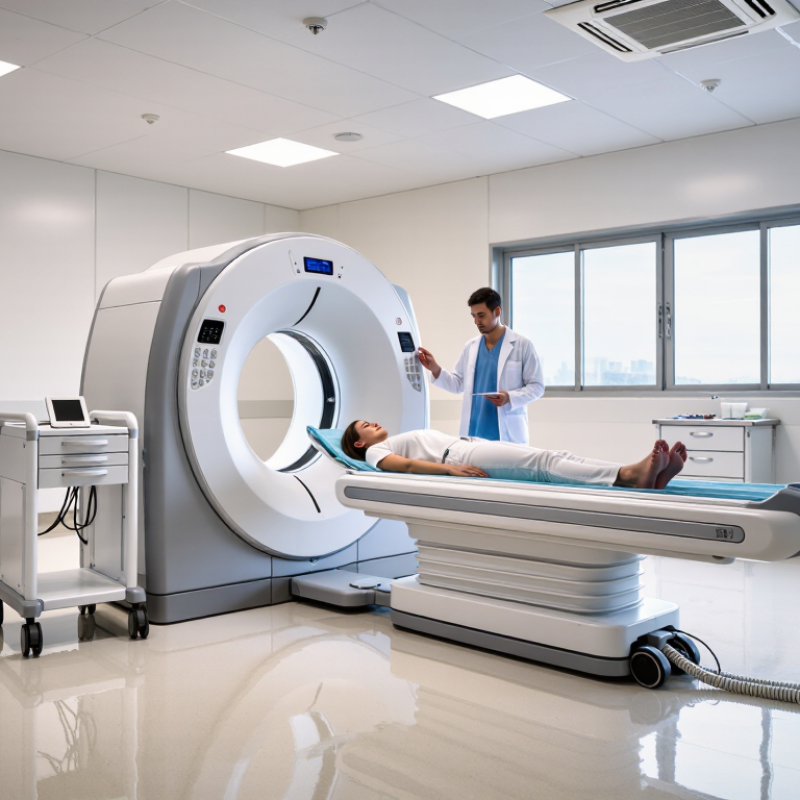
China has become a major sourcing center for portable CT scanners, supported by mature medical imaging engineering and large-scale manufacturing. Leading manufacturers usually develop compact systems for emergency care, clinics, operating rooms, and mobile diagnostic services. Their product ranges often include head CT, extremity CT, dental CT, and compact multi-purpose units.
Head CT scanners focus on rapid brain imaging after trauma or suspected stroke. Extremity models are lighter and suit orthopedic clinics, with dedicated imaging for wrists, ankles, or knees. Dental CT systems provide three-dimensional views of teeth and jaw structures. Some mobile units use wheeled frames, foldable components, and rechargeable power systems for movement between rooms. Measure the workflow.
Experienced Chinese manufacturers normally provide detector specifications, slice thickness, radiation-dose data, image reconstruction details, and electrical safety documentation. Buyers should also request phantom test results and independent quality records. A strong supplier explains calibration, software updates, training, warranty coverage, and spare-part access before signing an order.
Specifications can look impressive. They are not the whole story. A scanner may be portable but still difficult to position in a crowded emergency room. Battery life may also change under repeated daily use. I would inspect image quality, transport weight, installation requirements, and service response together. Factory audits, user references, and local regulatory review can reveal weaknesses that brochures often leave out.
Global buyers should compare portable CT suppliers through clinical performance, not brochure claims. MarketsandMarkets’ 2024 CT scanner report estimates the global market could grow from about USD 7 billion in 2024 to over USD 9 billion by 2029. That growth increases supplier choice, but also creates uneven specifications. Ask for measured spatial resolution, scan time, radiation-dose data, and image performance on moving patients. Request test images, not only technical tables.
Check compliance documentation carefully. Suppliers should provide applicable IEC 60601 test records, DICOM compatibility details, quality-system evidence under ISO 13485, and market-specific regulatory clearance. The IAEA emphasizes justified imaging and dose optimization in its radiation-protection guidance. Therefore, compare dose reports using the same phantom and protocol. Numbers without testing conditions can mislead.
Service capability matters in rural clinics and emergency units. Compare battery duration, recharge time, wheel stability, software updates, detector replacement, and engineer response times. A low price can still be expensive. Calculate total ownership cost over seven years, including training, calibration, shipping, and downtime. Gartner’s research on technology procurement repeatedly links lifecycle planning with better purchasing outcomes, although medical imaging needs stricter clinical review. I would not trust a supplier that avoids independent verification. Some buyers may also overvalue compact size; a narrow scanner is useless if workflow, ventilation, or cybersecurity requirements remain unresolved.
International purchasing requires more than checking image quality. Buyers should verify local registration, radiation-safety rules, and electrical requirements before ordering. The WHO Global Model Regulatory Framework for Medical Devices, published in 2023, stresses lifecycle control and post-market surveillance. Portable CT documentation should include IEC 60601-1, IEC 60601-2-44, ISO 13485 evidence, DICOM compatibility, and dose information. Requirements differ by destination. Never assume one certificate works everywhere.
Logistics planning should cover battery handling, shock protection, customs documents, and installation access. The World Bank’s Logistics Performance Index 2023 evaluates customs, infrastructure, tracking, and timeliness. These factors directly affect hospital deployment. WHO has reported that up to 80% of medical equipment can remain nonfunctional in some low-resource settings. Training is therefore practical risk control, not an optional service. Request remote sessions, operator manuals, radiation-safety training, and local-language troubleshooting. After-sales agreements should define response times, spare-parts availability, software updates, calibration, and escalation contacts. A fast shipment can still create a slow clinical rollout.
Tips: Ask for a destination-specific compliance checklist. Confirm crate dimensions before booking freight. Test image protocols during acceptance. Keep installation records. Our checklist may still miss local details, so involve a certified regulatory consultant before payment.